What Are the Most Common Signs of Termites?
The strongest signs of Eastern subterranean termites include:
- Winged termites emerging inside the home
- Piles of discarded termite wings
- Mud tubes along foundations or other structural surfaces
- Wood that looks intact on the surface but is damaged inside, sometimes with soil or muddy material present
- Wood that has become hollow, thin, or easily damaged
Other problems, such as peeling paint, sticking doors, or damaged baseboards, can occur around termite-damaged wood, but they are not proof of termites on their own.
Here is what each termite warning sign actually means.
Winged Termites Inside Your Home
For many Ohio homeowners, a swarm is the first clue that termites have been there all along.
Eastern subterranean termite colonies produce winged reproductive termites, often called swarmers or alates. Eastern subterranean termites typically swarm during the spring and early summer in Ohio.
A homeowner might suddenly find numerous small, dark, winged insects:
- Near a basement window
- Around a door
- Along a windowsill
- Near another source of light
- Emerging from a wall, floor, or foundation area
Seeing winged insects outdoors does not automatically mean termites are infesting your house. Eastern subterranean termites also swarm outdoors, sometimes from colonies in the soil or wood around a property. If the swarm is coming from an area close to the house, though, it’s a good reason to have the property checked.
Finding a termite swarm indoors, however, deserves prompt attention.
Not sure whether the insect you found is a termite? See Epcon Lane’s termite identification guide for more on what Eastern subterranean termites look like. If you’re still unsure, contact Epcon Lane for accurate identification.
Discarded Wings Near Windows and Doors
Sometimes homeowners miss the swarm completely.
What they find instead is the evidence left behind.
After termite swarmers land, they shed their wings. Those wings may collect on a basement floor, on a windowsill, near a door, or in other areas where the insects were attracted to light.
A few random insect wings on an outdoor porch are one thing. A noticeable accumulation of similarly sized wings inside your home is worth identifying.
This can be an especially easy clue to overlook because the swarmers may no longer be visible by the time you discover the wings.
Mud Tubes Along the Foundation
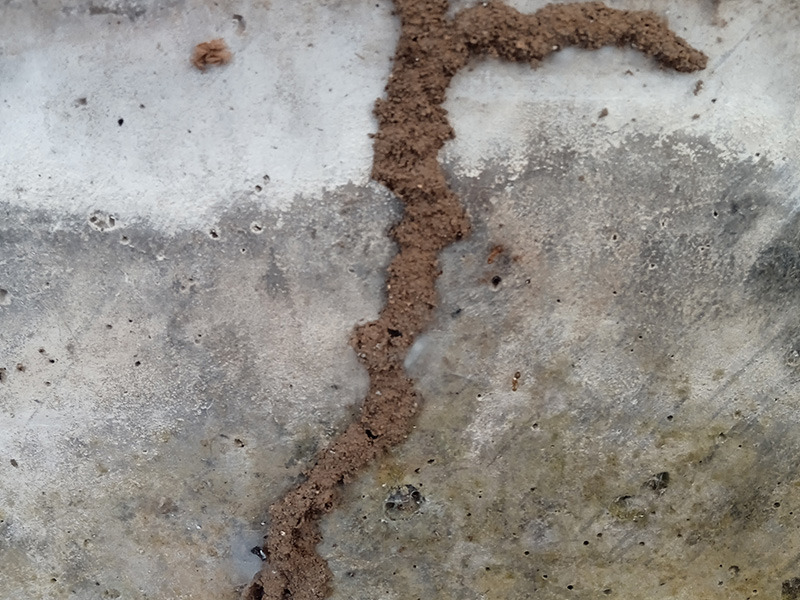
Mud tubes are one of the most recognizable signs of Eastern subterranean termites.
Because these termites travel between the soil and their food source, workers build narrow, protected tubes from soil and other materials. These tubes are often found on foundation walls, pillars, and other surfaces close to the soil.
A mud tube may look like a narrow, irregular line of dried mud running vertically or horizontally across a surface.
Simply knocking down a tube does not solve a termite problem. The tube is evidence of termite activity, not the colony itself.
Wood That Looks Fine Until You Look Closer
Termite damage does not always look dramatic from the outside.
Subterranean termites typically feed along the grain of the wood, leaving hidden channels that may contain dirt or muddy material. Even with significant damage inside, the outer surface of the wood can remain intact.
In other words, a board does not need to look destroyed to have termite damage inside.
Suspicious wood may:
- Feel unusually soft
- Break or crush more easily than expected
- Have a thin outer surface over damaged areas
- Reveal internal channels when already damaged or exposed
- Contain soil or muddy material inside
Some termite-damaged wood may also feel fragile or sound hollow when tapped, although that alone is not enough to confirm termites.
Termite Signs That Can Have Other Causes
Bubbling or uneven paint, sticking doors, damaged trim, and changes in flooring sometimes appear on lists of termite warning signs. But these problems can also result from moisture, humidity, settling, decay, or normal aging.
On their own, they are weak evidence of termites. They become more concerning when there are other signs of termite activity nearby.
Where Should Northeast Ohio Homeowners Look for Termite Signs?
Because Eastern subterranean termites come from the soil, the lower portions of a home deserve particular attention.
Common areas where evidence may be discovered include:
- Basement foundation walls
- Crawl spaces
- Sill plates and other wood near the foundation
- Floor joists and support structures
- Areas around plumbing and utility penetrations
- Porch and deck framing
- Garage foundations
- Wood located close to or directly against the soil
You do not need to dismantle walls or start probing structural lumber yourself. The point is simply to recognize unusual evidence in areas you already see while using your basement, garage, porch, or other parts of your home.
Can You Tell Old Termite Damage From New?
It is not always possible to tell from the damaged wood alone. Its appearance and condition do not reliably show when the damage occurred or whether termites are currently active.
Can You Have Termites Without Seeing Any of These Signs?
Yes. Eastern subterranean termites spend most of their time concealed in soil, wood, or protected tubes, so activity can be present without termites ever appearing out in the open.
In other words, not seeing termites yourself does not necessarily mean they aren't there.
What Should You Do if You Find Signs of Termites?
Termite problems are best handled professionally. Epcon Lane provides termite inspections and effective termite control for homeowners throughout Cleveland, Akron, and Northeast Ohio.
If termites are found, we can provide the professional treatment needed to address the problem and help protect your home. Contact Epcon Lane to get started.
Frequently Asked Questions About Termite Signs
Can a brick home get termites?
Yes. Eastern subterranean termites do not need the exterior of a home to be made of wood. They can travel from the soil through cracks, gaps, and protected pathways to reach wooden framing and other cellulose materials inside a structure.
Does finding termites in the yard mean they are in my house?
Not necessarily. Eastern subterranean termites naturally live and forage underground, so termites associated with a stump, buried wood, or other material outside do not automatically prove that the structure is infested. Evidence on or inside the home is more significant.
Can termites be active during a Northeast Ohio winter?
Yes. Eastern subterranean termite colonies do not disappear when temperatures drop. They remain underground and in protected areas, so an existing termite problem can persist through a Northeast Ohio winter, even when there are no obvious signs outside.
Get Expert Termite Help in Northeast Ohio
If you’re worried about termites in your home, make Epcon Lane your next call. Or, request a free quote online to get started. We’ll take it from there.