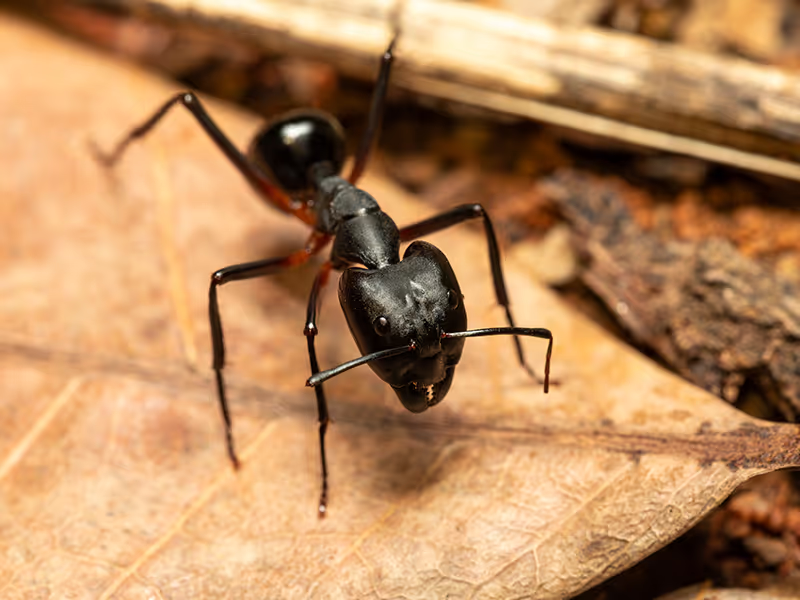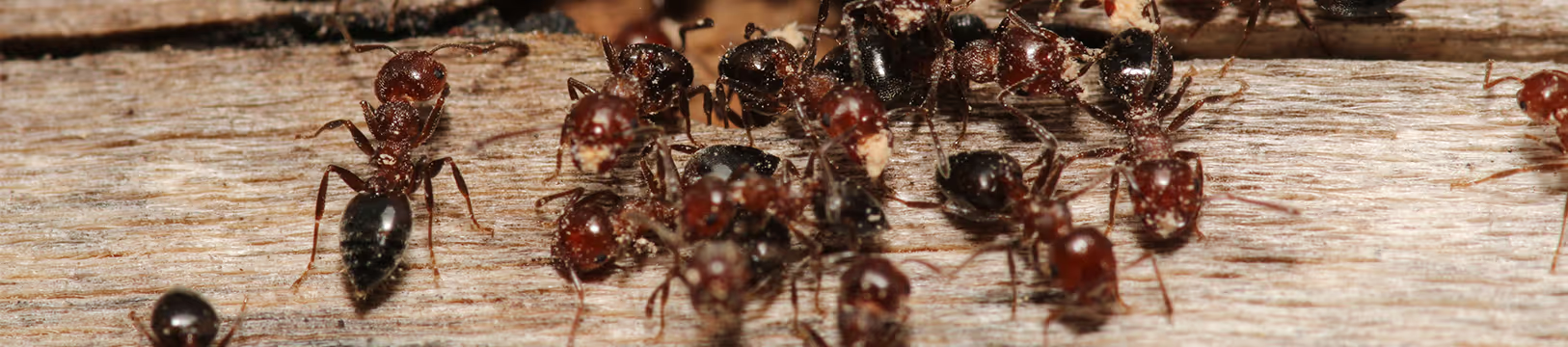
Seeing large black ants in your home can be unsettling—especially when they start showing up regularly. In Akron, Cleveland, and across Northeast Ohio, carpenter ants are one of the most common ants homeowners encounter. While they don’t eat wood, they do tunnel through it, which is why early identification matters.
This guide will help you recognize carpenter ants, understand why they show up, and know when professional pest control makes sense.
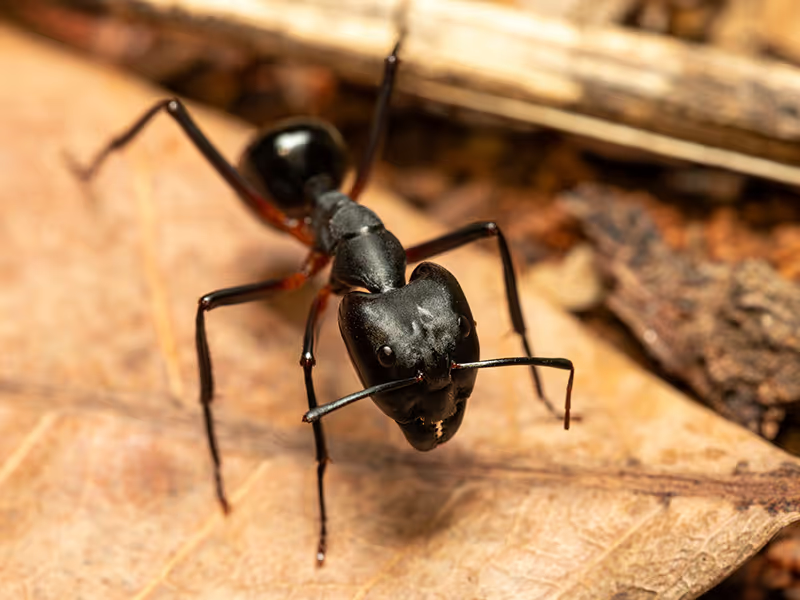
Not sure what you’re dealing with? Carpenter ants have a few clear traits:
If the ants you’re seeing are noticeably larger than typical house ants, carpenter ants are a strong possibility.
Carpenter ants are wood-nesting ants that excavate tunnels inside wood to build their colonies. Unlike termites, they do not eat wood. The purpose of their wood-working efforts is to create smooth, hollow galleries for nesting.
In Northeast Ohio, carpenter ants often establish:
Moisture plays a significant role in where carpenter ants settle.
Carpenter ants are frequently mistaken for termites, especially when winged insects appear indoors. Termites are sometimes casually referred to as “white ants,” even though they aren’t ants at all, which adds to the confusion for many homeowners.
Key differences:
Correct identification is important, since treatment methods differ.
Homes in Akron, Cleveland, and surrounding areas often provide ideal conditions for carpenter ants, including:
Carpenter ants are attracted to conditions, not poor housekeeping.
Carpenter ants may show up in several areas around the home, such as:
Seeing ants indoors—especially repeatedly—is often a sign of a nearby nest.
Carpenter ants don’t cause damage overnight, but long-term activity can weaken wood structures, especially if moisture issues go unaddressed.
Occasional sightings may be foraging ants. However, frequent activity often points to:
Early action helps prevent more extensive damage down the road.
Common signs homeowners notice include:
These signs usually mean carpenter ants are infesting, not just passing through.
While professional treatment is often needed, homeowners can reduce attraction by:
Moisture control is one of the most effective preventive steps.
Professional pest control is recommended when:
Carpenter ant control requires locating nests—not just treating visible ants. While DIY sprays and baits may kill ants you see, they rarely reach hidden nesting sites. Carpenter ants often build colonies inside walls or damp wood, and without locating those nests or addressing moisture issues, the activity usually continues or returns.
At Epcon Lane, we help homeowners across Northeast Ohio identify carpenter ant activity and locate nesting areas. Our pest control services focus on addressing the entire infestation—not just the big ants crawling across the floor.
Our approach focuses on:
If you’re seeing carpenter ants around your home, a professional inspection can help stop the problem before it gets worse.
Contact Epcon Lane Pest Control to schedule an inspection and protect your home with confidence.
Carpenter ants don’t eat wood. They feed on sweets, proteins, and other insects, and are often attracted to food crumbs, grease, pet food, and moisture inside or around the home.
Carpenter ants are not considered dangerous and rarely bite. The primary concern with this ant species is the structural damage they can cause over time.
A satellite colony is a secondary carpenter ant nest that forms inside a structure, often in damp wood or wall voids, even when the main colony is located outdoors.

Today was the first time Epcon Lane came out to service our home and John was awesome! He was very friendly, professional and personable. We're very happy with our decision to go with this company and can't wait for our future services!
Allie W.
Akron, OH

Matt was fantastic. Explained all options and was very thorough and friendly. Really like that they guarantee their work and will come back between spraying for any issues. These guys are top notch!
Jason L.
Cleveland, OH

I have always been pleased with the service I have received from Epcon Lane . Very effective and environmentally and pet conscious. Kermin truly addressed my needs yesterday . Seeing the new nest of yellow jackets and the carpenter ants starting to lay eggs . Gave the proper treatment and sent a very detailed message explaining everything. And wished me a good rest of my day. I am very appreciative!
Margaret G.
Akron, OH






Helpful Tips & Info