A tiny, speckled beetle on a windowsill can be easy to dismiss. But finding small, bristly larvae around a closet or baseboard is a different story.
Carpet beetles are found in homes throughout Akron, Cleveland, and Northeast Ohio. Although the adults are generally harmless, their larvae can damage certain fabrics and household belongings. Knowing what to look for can help you recognize an indoor problem before more damage occurs.
Adult carpet beetles are generally most noticeable in Northeast Ohio during spring and early summer, particularly from April through June. Although adult sightings tend to be seasonal, larvae can remain active indoors throughout the year, including winter. Their development depends more on indoor conditions and available food than on outdoor temperatures.
Carpet beetles belong to the insect family Dermestidae. Common types include varied carpet beetles and black carpet beetles, which differ in appearance.
Adult Carpet Beetles
Carpet Beetle Larvae
Adult beetles and larvae look remarkably different. A homeowner might find both without realizing they're the same insect at different life stages.
Adult carpet beetles typically live outdoors, where many species feed on flower pollen and nectar. They can enter through open doors and windows or arrive on cut flowers, furniture, and other belongings.
Indoors, female beetles lay eggs near materials that can support their developing larvae.
Carpet beetle larvae may be found:
Old bird nests or animal remains concealed within a structure can also provide food sources.
Carpet beetle larvae feed on a range of animal-based materials, including wool, silk, fur, feathers, leather, and hair. Some species also feed on certain dried foods and stored products.
Signs to watch for include:
The empty larval skins are an important identification clue. As larvae grow, they shed their outer coverings, which may accumulate near feeding locations.
Finding one adult carpet beetle doesn't necessarily mean you have an infestation. However, recurring sightings of larvae, shed skins, or damaged belongings may indicate that carpet beetles are developing inside your home.
Carpet beetles and clothes moths can both damage wool clothing, rugs, and other natural-fiber belongings. However, there are several differences worth knowing.
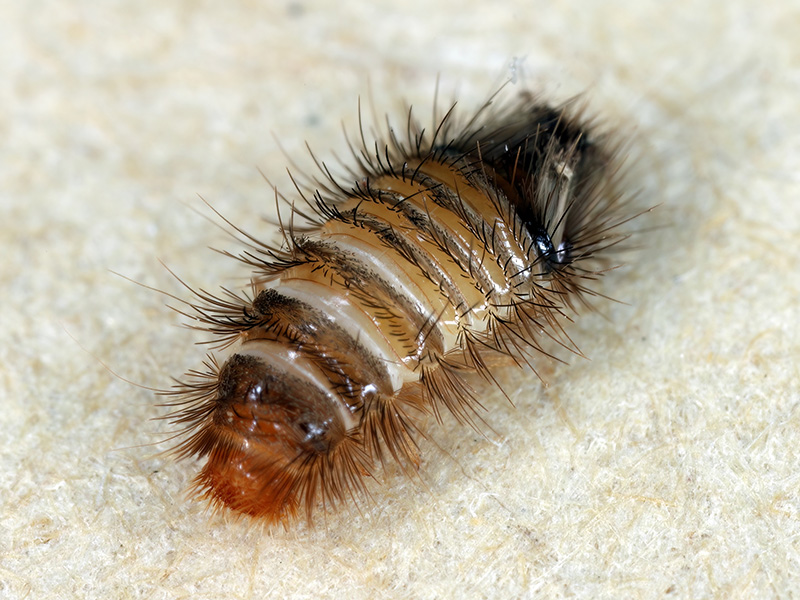
Whereas carpet beetle larvae are typically brownish, hairy, and sometimes banded, clothes moth larvae are generally cream-colored with darker heads, and some species produce silk webbing or protective cases.
Adult carpet beetles are small, hard-shelled insects, while adult clothes moths have narrow, fringed wings.
Getting rid of the adult beetles you see won't solve the problem if larvae are still feeding elsewhere in your home. Effective carpet beetle control involves finding where larvae are developing, identifying what's attracting them, and addressing affected areas.
Epcon Lane has been helping Northeast Ohio homeowners with pest problems since 1945, and we're still family-owned four generations later. When carpet beetles become a problem, homeowners can turn to us for more than a one-time treatment.
Carpet beetles are covered under all three of our Peace of Mind residential pest control plans, including Basic. These plans provide quarterly pest control service, interior treatments as needed, and free re-treatments for covered pests between scheduled visits.
Finding carpet beetle larvae or adult beetles in your home? Noticing unexplained fabric damage? Contact Epcon Lane or call (330) 530-9826 for assistance.
No. Carpet beetles do not bite people or feed on blood. However, the tiny hairs on their larvae and shed skins can cause skin irritation or an itchy, rash-like reaction in some people. These reactions can resemble insect bites, but skin irritation alone isn't enough to confirm a carpet beetle problem.
Carpet beetle larvae generally don't feed on clean synthetic materials such as nylon and polyester. However, wool blends or fabrics heavily soiled with food stains or body oils may be susceptible. Larvae can also feed on pet hair, lint, and other organic debris trapped in carpeting.
The larval stage varies considerably depending on the species, temperature, and available food. Some carpet beetles develop in just a few months, while others remain larvae for more than a year. This extended development period can allow infestations to go unnoticed for a considerable time.

Today was the first time Epcon Lane came out to service our home and John was awesome! He was very friendly, professional and personable. We're very happy with our decision to go with this company and can't wait for our future services!
Allie W.
Akron, OH

Matt was fantastic. Explained all options and was very thorough and friendly. Really like that they guarantee their work and will come back between spraying for any issues. These guys are top notch!
Jason L.
Cleveland, OH

I have always been pleased with the service I have received from Epcon Lane . Very effective and environmentally and pet conscious. Kermin truly addressed my needs yesterday . Seeing the new nest of yellow jackets and the carpenter ants starting to lay eggs . Gave the proper treatment and sent a very detailed message explaining everything. And wished me a good rest of my day. I am very appreciative!
Margaret G.
Akron, OH






Helpful Tips & Info