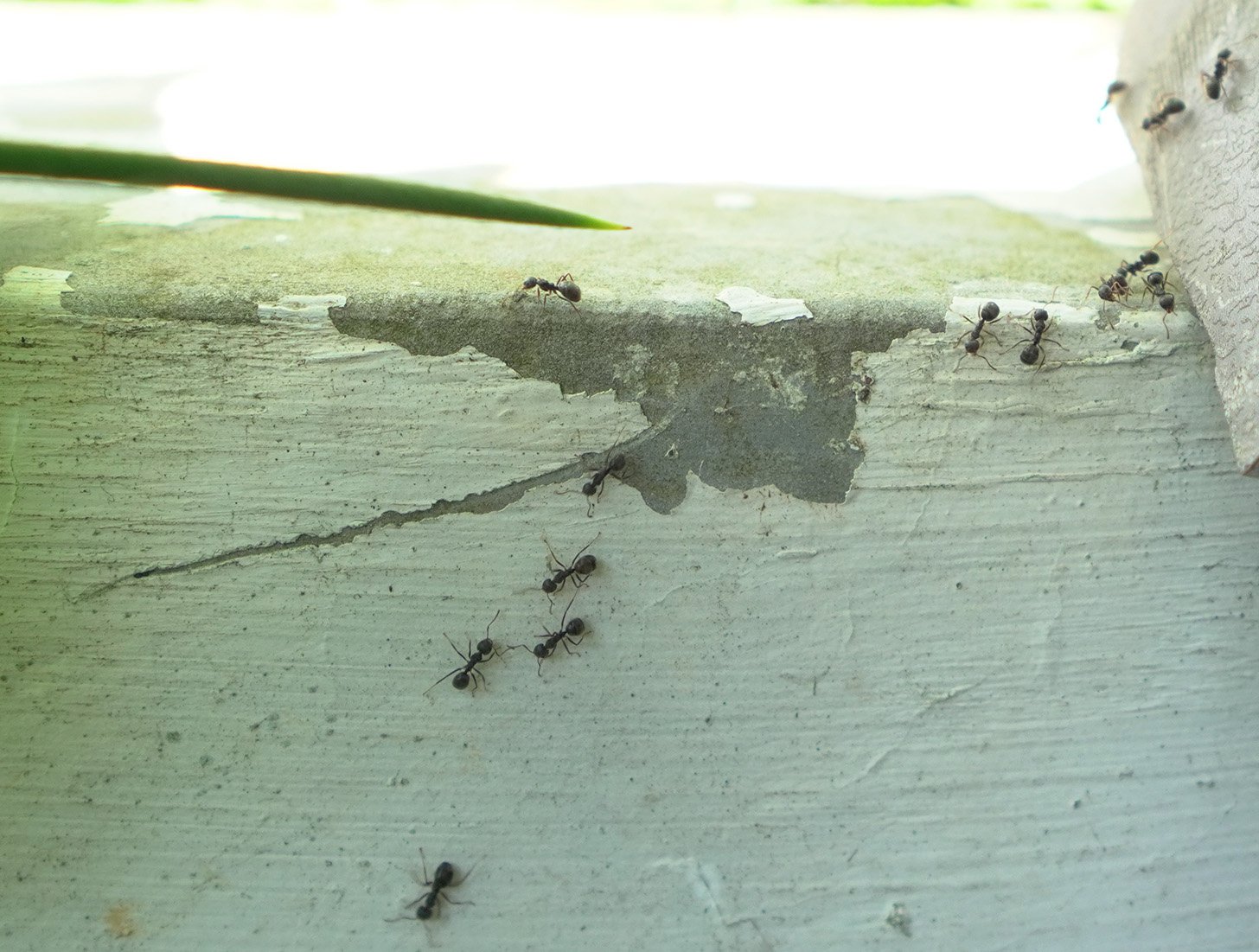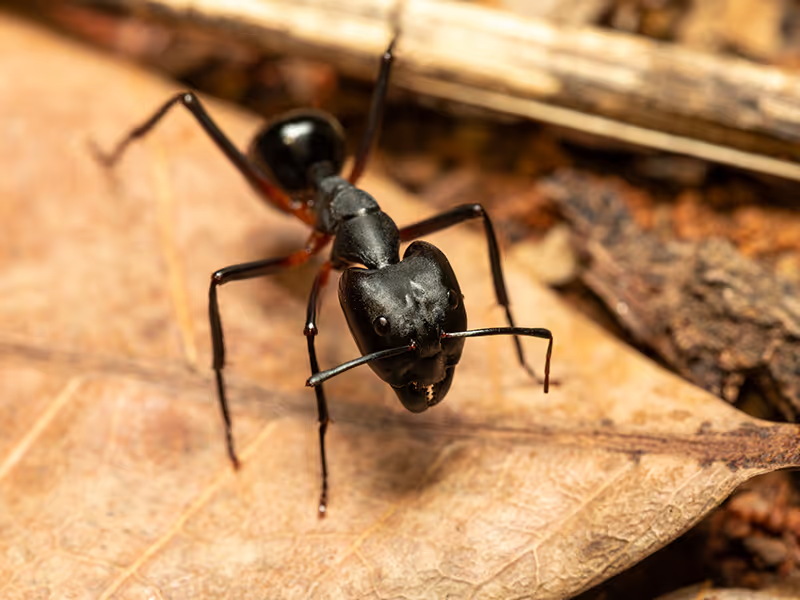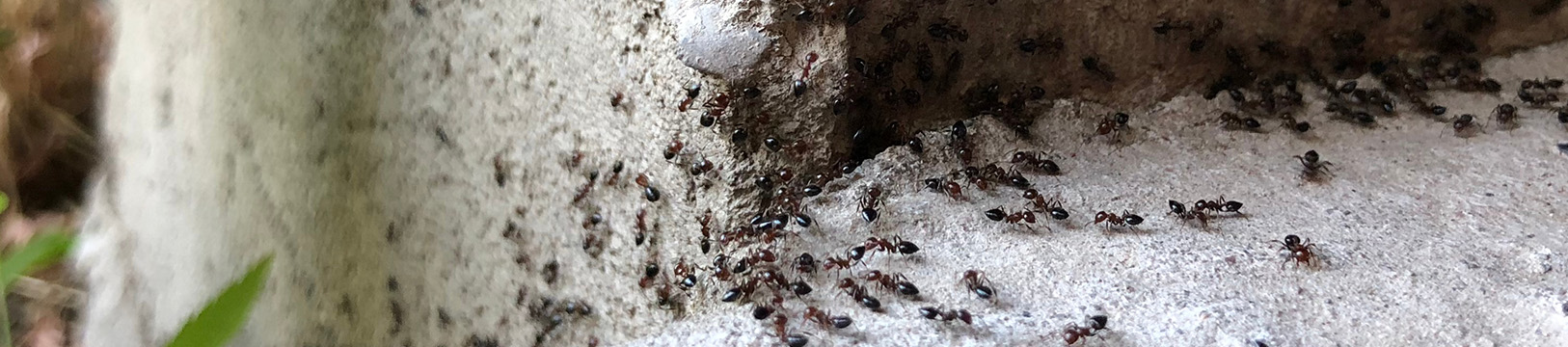
Pavement ants (Tetramorium caespitum) are most often noticed outside first—along sidewalks, driveways, or foundation edges where small piles of soil appear between cracks. In Northeast Ohio, including Akron and Cleveland, these ants are common outdoor pests that often enter homes in search of food.
Below is a breakdown of how to recognize pavement ants, where they nest, and what it means when they start showing up indoors.
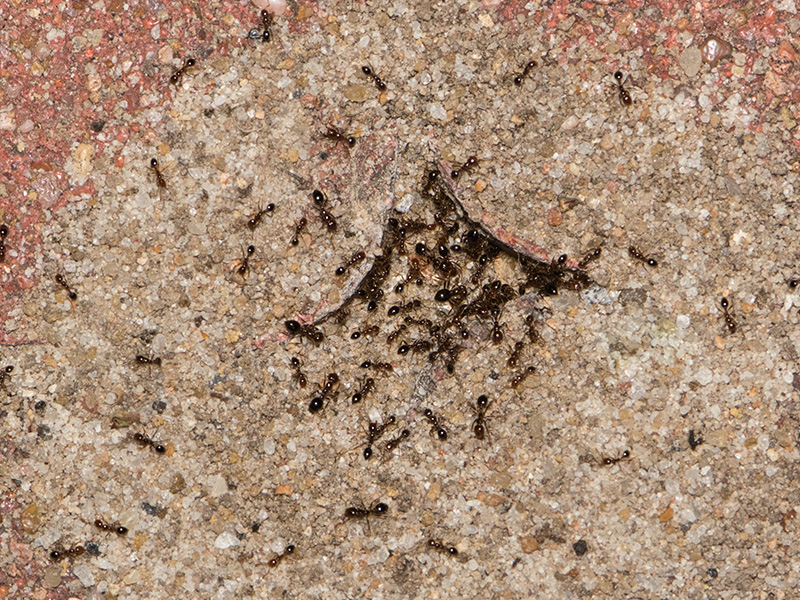
Pavement ants are most active in spring and summer as colonies expand and foraging increases. They often swarm in late spring to early summer, when winged reproductives emerge to start new colonies. Activity gradually slows in the fall and remains minimal during the winter months in Northeast Ohio, as ants stay deeper underground and out of view.
Pavement ants are small and often confused with other common house-invading ants. Key traits include:
Those small soil piles near sidewalks or foundations are one of the easiest ways to recognize pavement ant activity.
Pavement ants are outdoor ants that commonly build nests beneath:
From these nesting sites, worker ants often travel indoors through small cracks or gaps in search of food.
Unlike carpenter ants, pavement ants do not damage wood or structural materials.
Pavement ants are usually drawn indoors when nests are located close to the structure and food is easily accessible.
Common contributing factors include:
Activity usually increases in warmer months as colonies grow and foraging becomes more active.
Pavement ants are most often seen both outside and inside the home, including:
Indoor activity typically means ants are coming from a nearby outdoor nest.
Pavement ants are nuisance pests. They do not damage structures or pose significant health risks.
However, they can become frustrating because:
Persistent indoor activity usually points to a nest close to the home.
Common signs include:
These signs usually point to a nest located just outside the home.
Homeowners can help reduce pavement ant activity by:
While these steps may reduce attraction, they may not eliminate an existing colony.
Professional pest control may be helpful when pavement ant activity becomes persistent indoors. Because nests are often hidden beneath concrete or near foundations, they can be difficult to fully eliminate without targeted treatment.
Effective control focuses on locating the nest and applying treatments that target the whole colony—not just the visible ants.
Epcon Lane provides residential pest control services designed to eliminate and prevent pavement ants and other common household pests in Akron, Cleveland, and throughout Northeast Ohio.
Our Peace of Mind programs focus on targeted treatments to eliminate existing pest activity and on quarterly services to prevent new infestations. If a covered pest problem comes up between services, homeowners simply call or text, and we’ll come out to take care of it at no additional cost.
If you’re ready to stop pavement ants on your property, contact Epcon Lane today.
Pavement ants can both bite and sting, but it’s uncommon and usually mild. If it happens, it may cause slight irritation or a brief stinging sensation, but they are not considered dangerous to people or pets.
Pavement ant activity may slow down, but colonies typically remain in place. Without addressing the nest, ants often continue to return—especially during warmer months.
It’s common to see pavement ants swarming or “fighting” on sidewalks. This usually happens when nearby colonies compete for territory.
Most sprays only kill the ants you see. The colony is usually hidden under concrete or nearby soil, so activity often returns without treating the nest.

Today was the first time Epcon Lane came out to service our home and John was awesome! He was very friendly, professional and personable. We're very happy with our decision to go with this company and can't wait for our future services!
Allie W.
Akron, OH

Matt was fantastic. Explained all options and was very thorough and friendly. Really like that they guarantee their work and will come back between spraying for any issues. These guys are top notch!
Jason L.
Cleveland, OH

I have always been pleased with the service I have received from Epcon Lane . Very effective and environmentally and pet conscious. Kermin truly addressed my needs yesterday . Seeing the new nest of yellow jackets and the carpenter ants starting to lay eggs . Gave the proper treatment and sent a very detailed message explaining everything. And wished me a good rest of my day. I am very appreciative!
Margaret G.
Akron, OH






Helpful Tips & Info